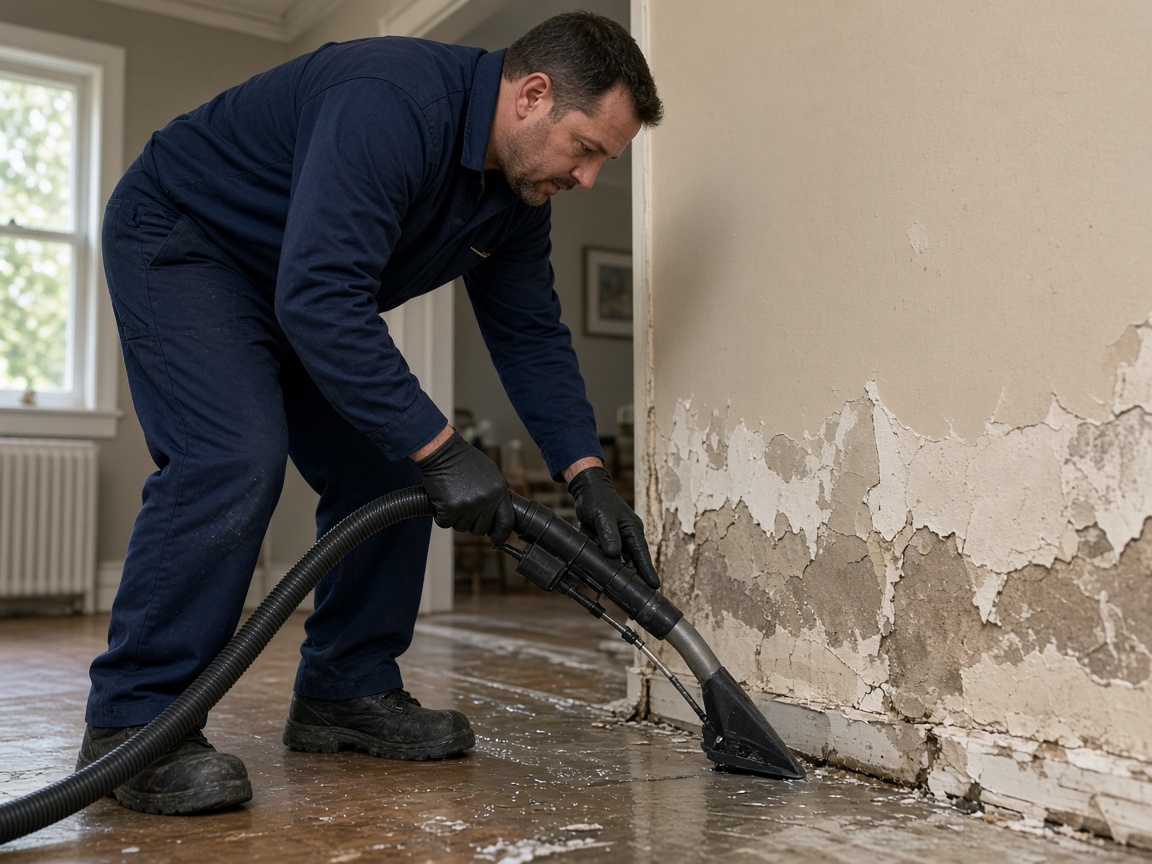
Glendale's older housing stock in neighborhoods like Tropico and Rossmoyne often features plaster-over-lath walls and raised foundations that trap moisture after even small leaks. Mediterranean climate summers with low humidity can mask ongoing saturation until winter rains arrive, allowing rot to spread along sill plates and into subfloors. Technicians must pull baseboards and use moisture meters on multiple layers because surface readings alone miss water that has wicked into the horsehair plaster common in pre-war homes near Forest Lawn Memorial Park.
Jobs near the Americana at Brand or along Chevy Chase Drive frequently involve slab leaks from older galvanized lines that corrode faster due to the area's soil chemistry. Extraction crews use subfloor fans and dehumidifiers sized for the tight lot spacing typical in these blocks, while monitoring for hidden mold growth that develops when hot dry air pulls moisture upward into wall cavities. Permits from the City of Glendale are required when structural members are compromised, and crews coordinate with Los Angeles County inspectors on any work that affects shared walls in multi-unit buildings.
Repair crews also address post-storm intrusion from Griffith Park runoff that funnels toward lower-lying streets in Adams Hill. In these cases, French drains and vapor barriers are installed only after verifying soil saturation levels, because the compacted clay common here slows natural drainage and extends drying times beyond what suburban Pasadena or Burbank properties experience.
Technician insight
In Glendale, the thing that catches most people out with Water Damage Repair is how quickly water travels behind the original plaster in Rossmoyne and Tropico homes once it hits the lath; the hot dry summers hide the problem until the next rain, so we always pull trim and check multiple elevations rather than relying on surface readings alone.
Hidden moisture after bathroom leak in Rossmoyne
Homeowner noticed staining on a first-floor ceiling below a second-floor bath. Inspection found water had traveled along plaster lath into the joist bay and down an exterior wall. Crew extracted remaining moisture, replaced two joists, and dried the cavity over four days before reinstalling finishes.
Water Damage Repair Services We Offer
✓Emergency Water Extraction
Removes standing water from basements and crawl spaces in Glendale homes before it reaches framing, using truck-mounted pumps suited to narrow driveways on Rossmoyne hillsides.
✓Plaster Wall Drying
Targets hidden moisture behind plaster in pre-1950 Adams Hill and Tropico houses with directed air movers and probes that avoid cracking fragile finishes.
✓Subfloor Repair After Leak
Replaces rotted joists and plywood in older raised foundations common near Chevy Chase, matching original lumber dimensions to satisfy local building requirements.
✓Slab Leak Containment
Locates and isolates leaks under concrete slabs in Glendale properties, then installs temporary barriers to protect adjacent rooms from migration during repair.
✓Ceiling Leak Restoration
Removes saturated drywall and insulation above second-floor ceilings in multi-story homes near the Americana at Brand, followed by mold-inhibiting treatments.
✓Storm Runoff Cleanup
Clears debris and extracts water from yards and lower levels after Griffith Park area storms, preventing soil saturation from undermining foundations in Adams Hill.
Water Damage Repair Cost in Glendale, CA
| Service | Typical Range | What Affects It |
|---|---|---|
| Emergency Water Extraction | $400–$900 | Varies with volume and number of rooms |
| Plaster Wall Drying | $600–$1,200 | Higher in multi-story homes with limited access |
| Subfloor Repair | $800–$2,000 | Depends on square footage and joist replacement |
| Full Room Restoration | $1,500–$3,500 | Includes materials and labor for typical 200 sq ft space |
Ranges are typical for Glendale, CA and confirmed with an exact written quote before any work starts.
How it works
- 1
On-Site Assessment
Technician inspects affected rooms, checks moisture levels in walls and floors, and notes construction type typical of the neighborhood.
- 2
Water Removal
Standing water is extracted and wet materials are removed to prevent further spread into adjacent spaces.
- 3
Drying and Monitoring
Equipment is placed and daily moisture readings are taken until levels return to normal for Glendale's climate.
- 4
Structural Repair
Damaged framing, drywall or flooring is replaced and finished to match existing construction.
Pricing
Upfront quotes after inspection; cost driven by access, material type and drying duration in older Glendale homes.