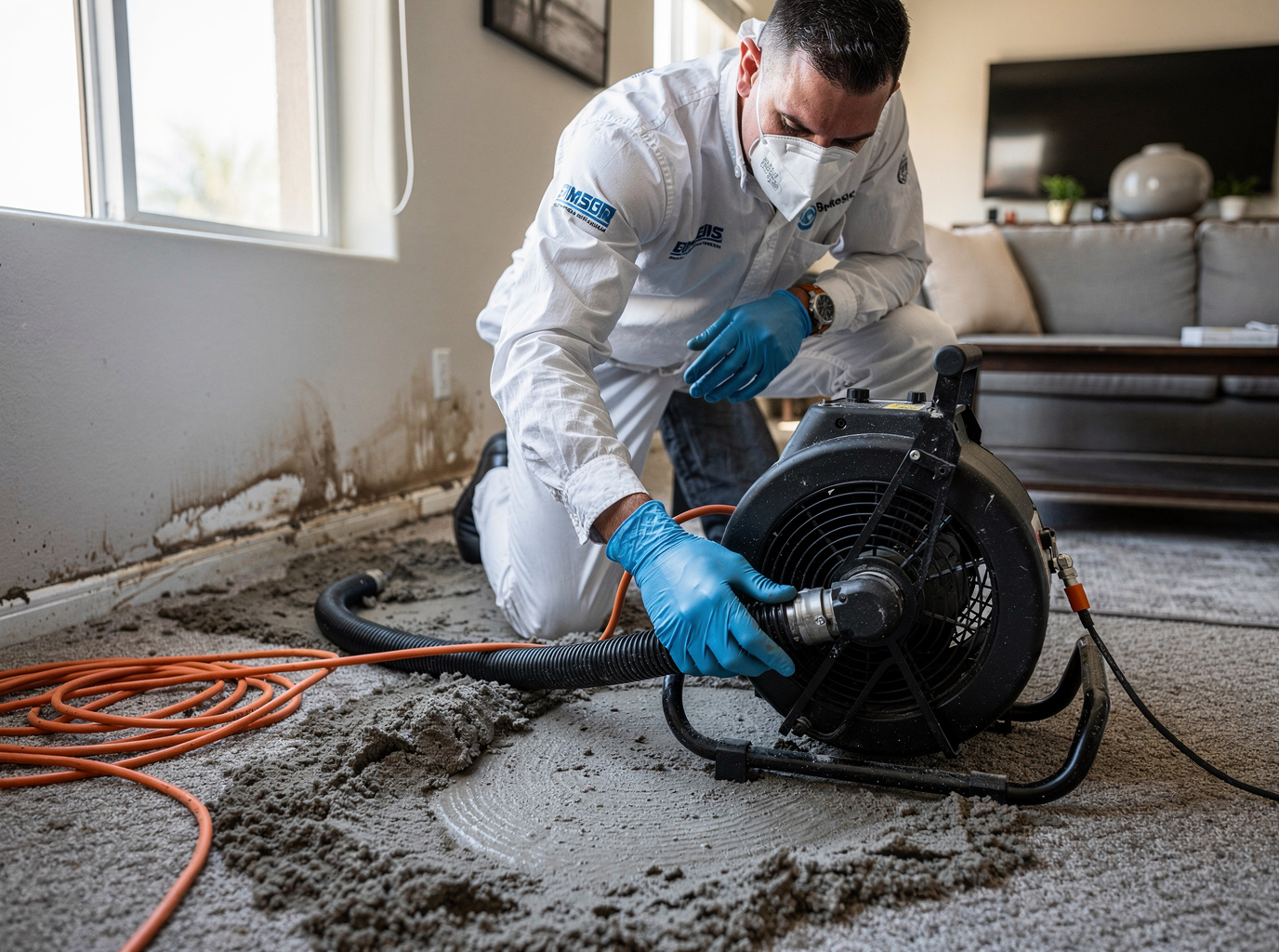
Glendale's older housing stock in neighborhoods such as Adams Hill and Tropico often features plaster walls over wood lath and single-story stucco construction from the 1920s through 1960s. When water enters through roof penetrations or slab leaks, it travels along these hidden cavities and reaches adjacent rooms faster than in newer builds. Mediterranean climate patterns bring concentrated winter rains after long dry summers, so saturation events frequently follow roof flashings that have cracked from heat expansion. Technicians must pull baseboards early and use moisture meters on both sides of interior walls to locate pockets that standard visual checks miss.
Los Angeles County building practices in areas near Forest Lawn Memorial Park and the Americana at Brand require permits for any structural drying that affects load-bearing elements. Crews document moisture levels at multiple depths in hardwood floors and subfloors before installing drying equipment to satisfy inspectors. In Chevy Chase and Rossmoyne, hillside lots create drainage paths that direct runoff toward foundations during rare but intense storms, so exterior grading checks become part of every job. Failure to address soil saturation around the perimeter often leads to recurring interior moisture weeks after the initial extraction.
Nearby cities such as Pasadena and Burbank share similar aging infrastructure, yet Glendale's mix of multi-family buildings and single-family homes on narrow lots limits equipment placement. Large dehumidifiers and air movers must often run through doorways or window openings, extending drying times when access is restricted. Technicians track relative humidity daily because the hot, dry summers that follow winter events can cause rapid shrinkage cracks in wood framing if moisture is removed too aggressively.
Technician insight
In Glendale the thing that catches most people out with water damage restoration is hidden moisture trapped behind plaster in 1920s–1950s homes in Tropico and Adams Hill. Winter rains followed by the dry Mediterranean summers make those pockets expand and contract, so skipping daily meter checks on both sides of the wall almost always leads to callbacks.
Slab Leak in Rossmoyne Residence
A homeowner noticed buckling hardwood near the kitchen after heavy winter rain. Inspection found water migrating from a cracked slab line under the 1940s addition. Extraction and targeted drying of the subfloor prevented mold growth; new flooring was installed once moisture readings stabilized.
Water Damage Restoration Services We Offer
✓Emergency Water Extraction
Rapid removal of standing water from basements, garages and living spaces using truck-mounted pumps to prevent further absorption into Glendale's older wood and plaster assemblies.
✓Structural Drying and Dehumidification
Placement of commercial air movers and dehumidifiers to pull moisture from walls, subfloors and ceilings in homes throughout Adams Hill and Rossmoyne.
✓Mold Prevention After Water Damage
Application of antimicrobial treatments and HEPA air scrubbing once drying is complete to stop growth in hidden cavities common to Tropico and Chevy Chase construction.
✓Hardwood Floor Restoration
Sanding, refinishing or selective board replacement for water-damaged oak and pine floors found in many pre-1960 Glendale residences.
✓Drywall and Insulation Replacement
Removal of saturated drywall sections and insulation followed by new installation and texture matching to restore interiors after leaks near Griffith Park.
Water Damage Restoration Cost in Glendale, CA
| Service | Typical Range | What Affects It |
|---|---|---|
| Emergency Water Extraction | $250–$650 | Varies with volume and access in multi-story homes |
| Full Structural Drying | $800–$2,200 | Influenced by square footage and number of rooms |
| Drywall Removal And Replacement | $400–$1,100 | Depends on linear feet and finish matching |
| Hardwood Floor Drying And Repair | $600–$1,800 | Affected by wood type and cupping severity |
Ranges are typical for Glendale, CA and confirmed with an exact written quote before any work starts.
How it works
- 1
On-Site Assessment
Technician inspects all affected rooms, uses moisture meters on walls and floors, and documents conditions in neighborhoods like Adams Hill.
- 2
Water Removal
Standing water is extracted with portable and truck-mounted equipment to stop migration into adjacent spaces.
- 3
Drying And Monitoring
Air movers and dehumidifiers run while daily moisture readings track progress until materials return to normal levels.
- 4
Repairs And Restoration
Damaged drywall, flooring and trim are replaced or refinished to match original construction.
Pricing
Upfront written estimates provided after inspection; final cost depends on water volume, affected materials and drying duration.